



What Is TMJ?
The temporomandibular joints (TMJs) connect your lower jaw to your skull, and you use them thousands of times a day: every word, every bite, every swallow. While “TMJ” technically refers to the joints themselves, the term is commonly used to describe temporomandibular joint disorder (TMD), a condition affecting the joints, the muscles that move them, and the bite.
TMJ disorders develop when this system falls out of balance. Bite imbalances, abnormal jaw movement, chronic muscle tension, and problems with the cushioning disc inside the joint can all force the muscles of the jaw, face, and neck to work overtime, all day, every day. That constant strain is why TMJ dysfunction so often shows up as pain far from the joint itself.
Because the system is so interconnected, guessing at the cause leads to ineffective treatments. An accurate TMJ diagnosis built on objective data is the essential first step.
Why Patients Travel to See Dr. Haddad
Dr. Jeffrey Haddad has spent more than 25 years focused on TMJ disorders and dental sleep medicine. He is an LVI Fellow and a nationally recognized educator who teaches dentists and physicians nationwide to diagnose and treat these conditions. He is also a published author and a frequent media contributor on TMJ and sleep topics.
The result: when other providers hit the limit of what they can diagnose, they send their patients here. People travel from across Michigan and out of state, often carrying years of imaging, failed appliances, and prescriptions that never worked. What they find is different: diagnostic technology most offices lack, and a doctor who can read what it reveals. You can review Dr. Haddad’s full credentials on our About page.
Or Call (248) 480-0085
Neuromuscular Dentistry
Neuromuscular dentistry is the science of finding the jaw position where your joints, muscles, teeth, and nerves can finally stop fighting each other. When the jaw rests in its healthiest position and moves efficiently, the chronic strain that drives pain can often be reduced or eliminated.
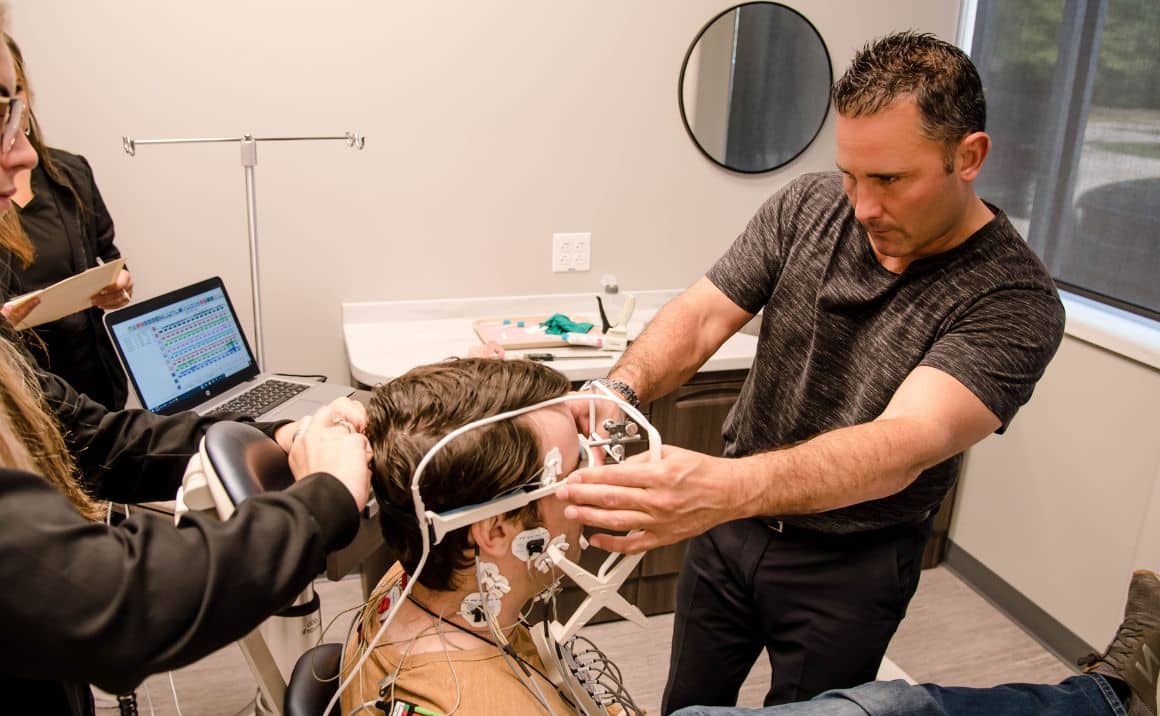
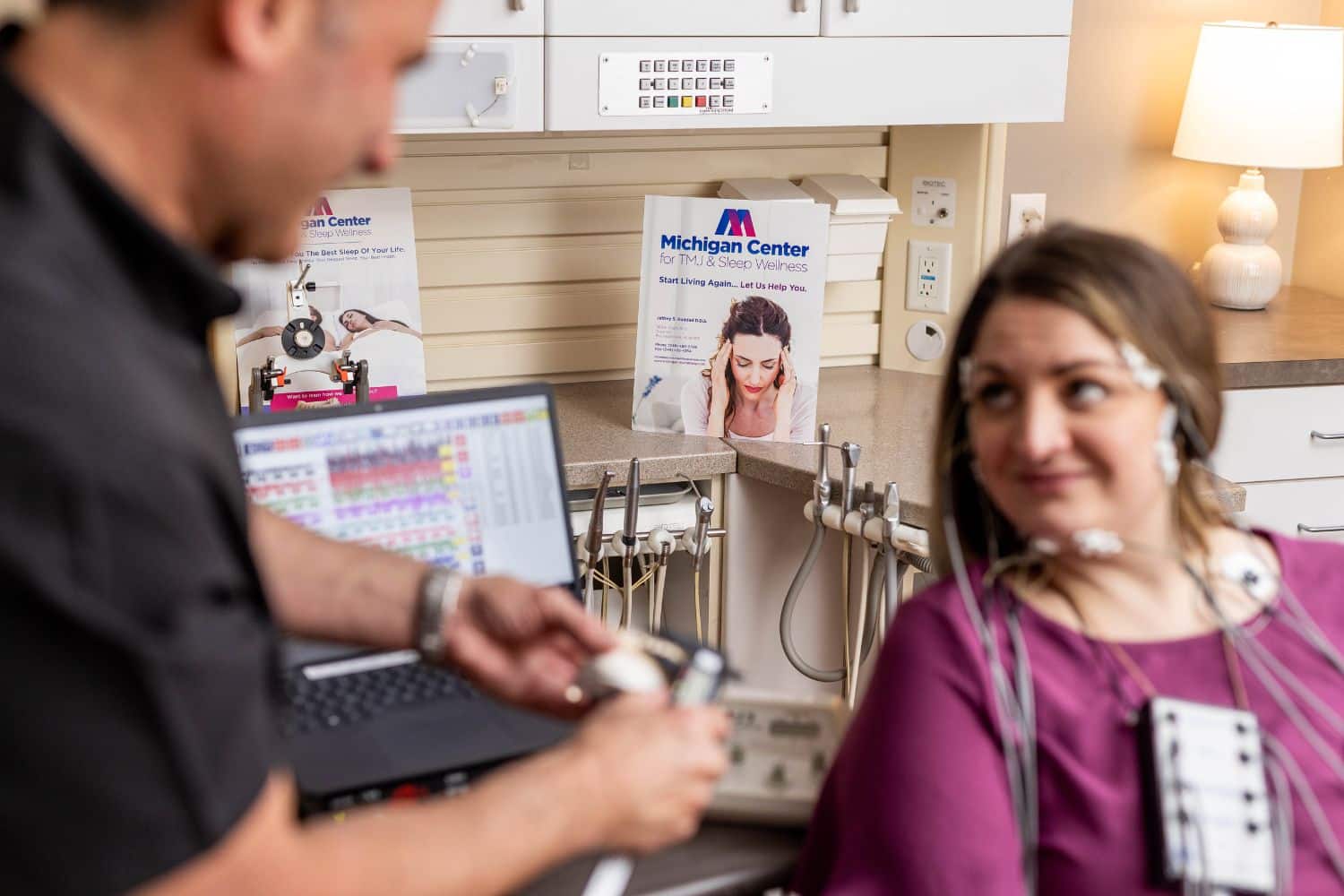
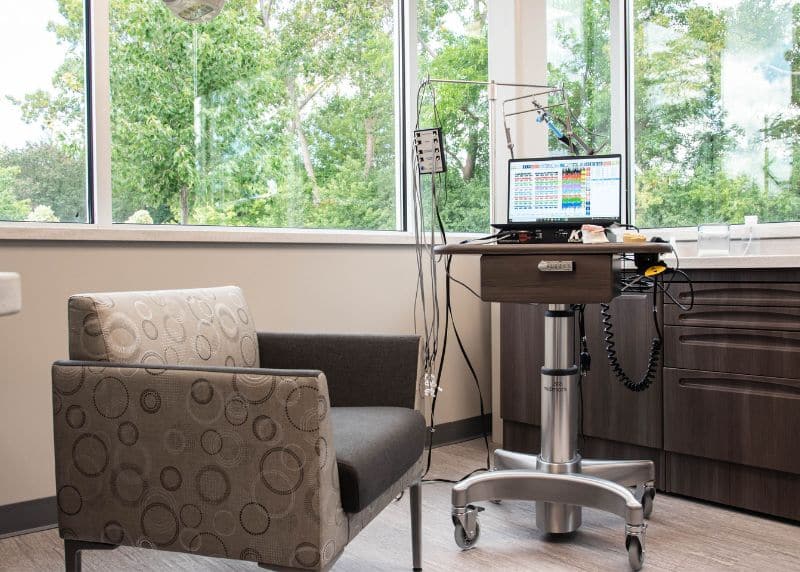
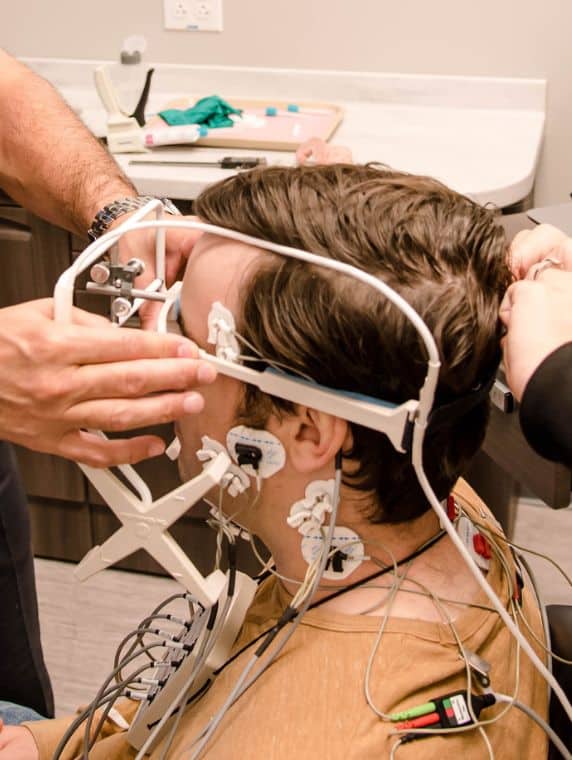
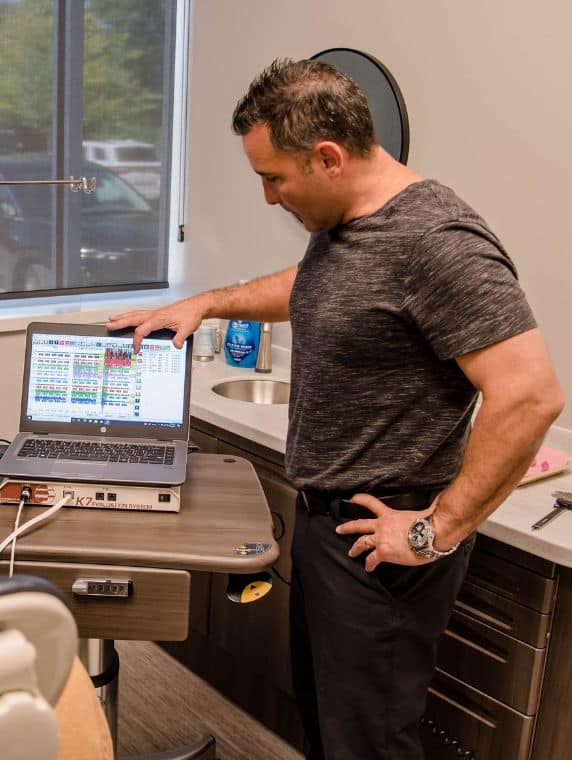
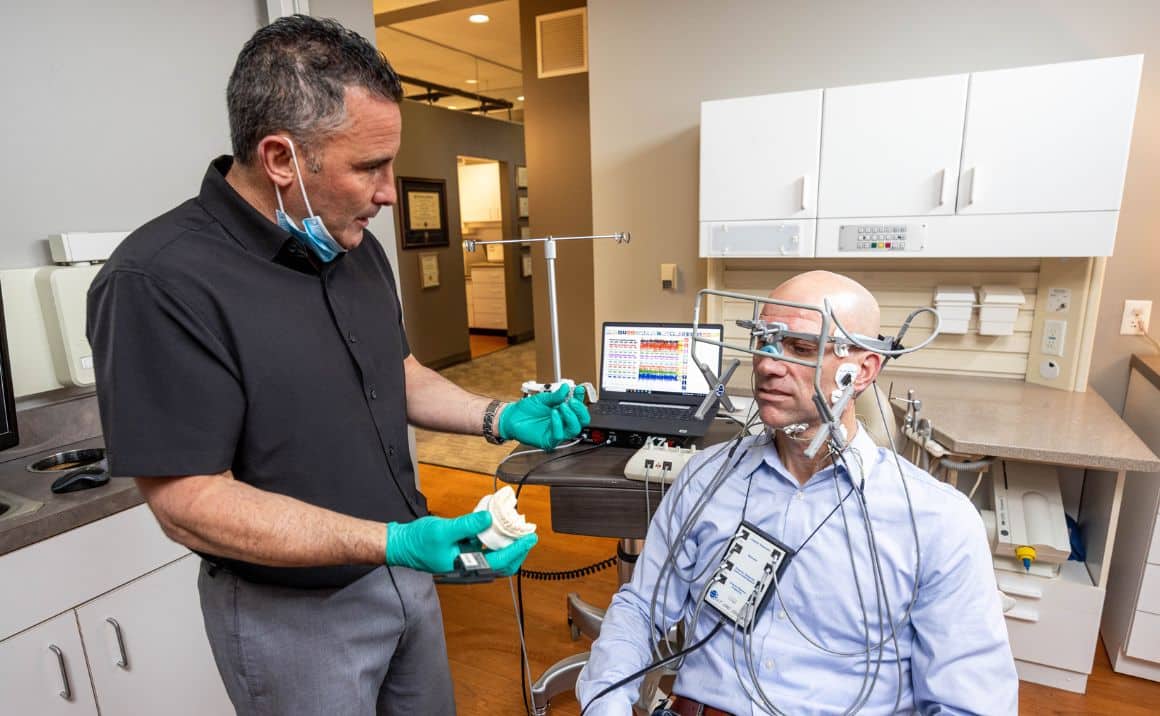
Treatment begins with advanced diagnostic testing to identify your jaw’s optimal resting position. Dr. Haddad uses the Myotronics K-7 Evaluation System to track your jaw’s precise movement and measure the activity in your muscles, objective data that shows what a visual exam or standard X-ray never could. Once the ideal position is established, a custom oral appliance supports proper alignment and function. When indicated, reconstructive dentistry can make that corrected position permanent.
Neuromuscular treatment can be highly effective on its own and may be combined with physical therapy, Laser TMJ Therapy, or other therapies depending on your needs.
Or Call (248) 480-0085




Understanding the Signs of TMJ Disorder
TMJ symptoms rarely stay in the jaw. Because the temporomandibular joints share muscles and nerve pathways with the entire head and neck, dysfunction can surface almost anywhere above your shoulders. Recognizing the pattern is often the first step toward relief.
Jaw Pain and Functional Difficulties
Persistent jaw pain, facial soreness, stiffness, and discomfort while chewing are the symptoms most people associate with TMJ. Clicking, popping, or grinding sounds when opening and closing the mouth, or a jaw that locks or moves unevenly, can make something as simple as dinner with your family a source of dread. It does not have to be.


Headaches, Migraines, and Neck Tension
The muscles that move your jaw connect directly to the muscles of your head, face, and neck. When jaw dysfunction keeps those muscles clenched around the clock, the result is chronic headaches, recurring migraines, neck pain, shoulder tension, and facial pressure. These symptoms are usually treated one at a time by different providers, and they keep coming back because no one has treated what they share: the source.
Symptoms That Are Easy to Overlook
Some of the most frustrating TMJ symptoms look nothing like a jaw problem. Ear pain, ringing in the ears (tinnitus), dizziness and vertigo, bite changes, unexplained facial discomfort, and even numbness or tingling in the hands can all be traced back to temporomandibular dysfunction. Patients with these symptoms often see specialists in ear, nose, and throat medicine or neurology, get clean test results, and are left with no explanation at all. A comprehensive TMJ evaluation frequently finds what those workups miss.

The TMJ Precision Approach™
The TMJ PRECISION APPROACH™ is the treatment system Dr. Haddad developed to do what standard care cannot: replace guesswork with measurement.
Rather than managing symptoms, this approach combines neuromuscular diagnostics, computerized jaw tracking, muscle electromyography, 3D CBCT imaging, and proven treatment techniques to identify and correct the root cause of your condition. You will see your own data. You will understand exactly what is wrong and exactly what the plan is to fix it. And the results speak for themselves: Dr. Haddad’s TMJ treatment carries a success rate of over 95%.
Many patients arrive after years of being told nothing is wrong or that medication is their only option. What they have actually been missing is not hope. It is information, and that is precisely what this process delivers.
Or Call (248) 480-0085
Schedule Your TMJ Consultation in Detroit
Every month you spend managing symptoms is a month the underlying dysfunction continues. An accurate diagnosis changes that, and it starts with a single visit.
If you are not sure whether your symptoms point to TMJ, take our quick TMJ Assessment. When you are ready for answers, schedule your comprehensive evaluation with Dr. Haddad or call (248) 480-0085. Relief starts with knowing what is actually wrong.
Or Call (248) 480-0085

Frequently Asked Questions
Michigan Center for TMJ & Sleep FAQs
Michigan Center for TMJ & Sleep FAQs
We understand that TMJ symptoms can be frustrating and confusing, especially when previous evaluations have not produced clear answers. Here are responses to the questions we hear most often.
